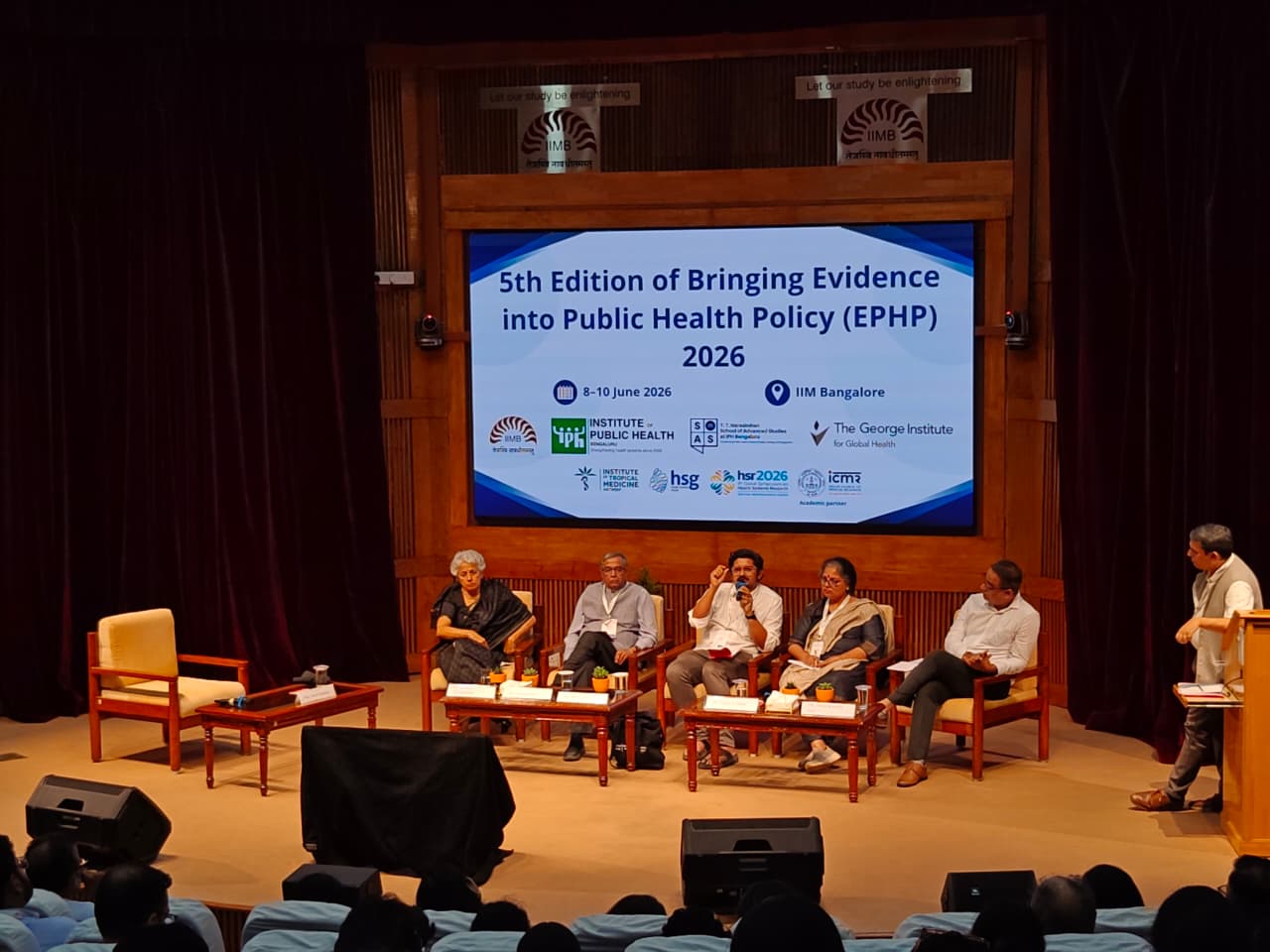
That was one of the comments* which came up after the panel discussion in EPHP which I was part of.
I’m glad that my reciting of how wealth is distributed in India hit (some of) the audience and provoked this response. I had said my thumb rule of knowing where you are:
| Money | Position |
| Below poverty line income per month (round it up to ₹1,500) | Poorest 25% |
| 2 times BPL income (₹3,000) | Poorest 50% |
| 1 crore wealth in total | Top 10% |
| 10 crore wealth in total | Top 1% |
The elites live in a cognitive distortion
When you live in a country with crores of people, you tend to lose the big picture. If you live amongst a particular category of people, you tend to become absorbed in the thoughts and discussions of that category.
When you live among the elites, you tend to think that most people are elites, and that poor is just a small population. At most, you see the middle class workers who run around for the elites and think that most people are at least middle class. You tend to forget that middle class life itself is a struggle. You also tend to forget that poor people exist. You completely forget that there is a very very large number of poor people.
Human beings already can’t make sense of big numbers.
And when they’re living in a capitalistic value system and have imbibed a casteist lens of looking at society, they won’t even try to make sense of big numbers.
The elite is you
The distortion works in the other direction too. When you’re in the top 1%, when you’re an engineer, doctor, government officer, entrepreneur, lawyer, etc, you think about people much richer than you as the elite. The Ambanis and Narendra Modi’s benami (Adani) becomes the only elite. In your mind there are 10 people who are elite in this country and the rest (including you) are middle class. How distorted!
The elite is you. And I’m not even adding a conditional because if you read this post till here on the internet, you’ve enough English and enough time to be in the top 20% Indians.
As my friend Subin recently posted on LinkedIn, “touch grass”.
When you see the scale of the problem, you inevitably get a sense of urgency
The elites are not just conditioned to accept the status quo, they also excel in defending it. If you say the truth you get labeled as “too radical” and “immature”. You are thrown out of places because you’re “too naive”.
But the elite will never stop sounding like they’re all for changing the system. They will keep talking about “policy engagement”, “nudging the system”, “advocacy”. They will talk about “T” shaped change. They will talk about decentralization. They will talk about intersectoral coordination.
They will even talk about poverty.
But they won’t talk about “class”. They won’t talk about “elites”. They won’t mention “caste”. If they are women elites, they will talk about patriarchy, but not about brahmaniacal patriarchy or capitalist patriarchy.
When you see how generations after generations people are being made to wait (for a better life), how the rhetoric of the elite is always against revolutionary/radical change, then your body sends a signal of urgency to your brain.
And that’s how a radical is born.
That’s when people start demanding radical transformation of the system. That’s when they reject the system altogether and fight from outside. That’s when they call out the performativity of “bold statements”. That’s when they get irritated with the moderate elites. That’s when they start getting nausea in elite campuses and the bullshit that gets discussed to death in their auditoriums. That’s when they become unlikable in the elite circles.
If you are someone who can’t stand criticism of the elite circlejerk around you, then probably you have to ask yourself — “Whose side are you on?”
*I learned after writing this blog that the comment was made by Tarun Seem, someone who knows how the system needs radical transformation and have been doing their bit for bringing that change in. No wonder!
Subscribe to my Substack Newsletter
As you might have noticed, social media these days prioritize engagement and doesn’t really let people build relationship with an audience. One way to take back some control is to directly be connected to your favorite authors, artists, etc through e-mail. And that’s what subscribing to my newsletter is about, too. I’m intentionally staying away from substack (which is susceptible to enshittification), and self-hosting the newsletter. What that means is also that the mails could land in spam. So, please press “Not spam” if they do end up in spam. Thank you!
You can fill your details below
↓